
10 Rules for Forklift Safety
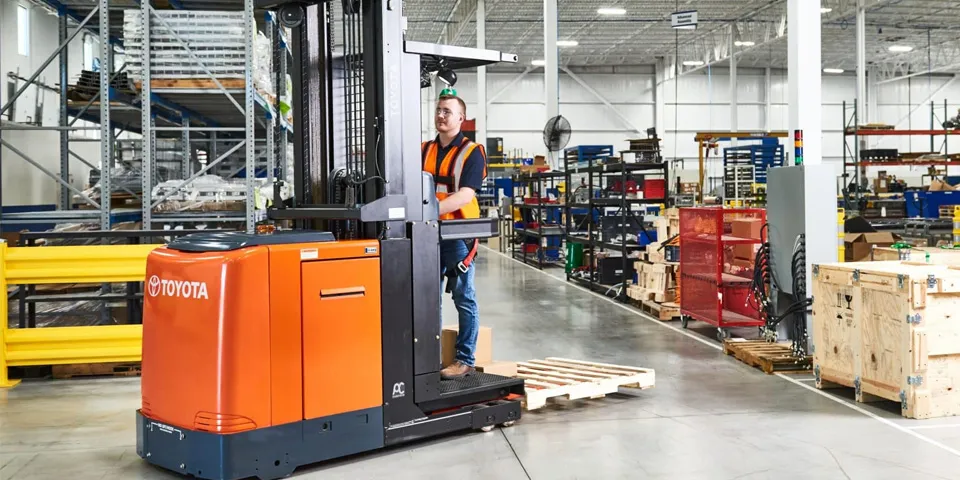
- Only trained and authorized individuals should operate material handling equipment. These people must always be aware of their surroundings and use caution over speed.
- Forklifts should be thoroughly inspected prior to starting work and the shift supervisor should be informed of any problems. Communication on any potential mechanical issues can reduce downtime as well as injury.
- Every warehouse and worksite is different. Operators, as well as pedestrians, must follow all worksite rules, restrictions and regulations. Forklifts should only be operated in designated areas.
- Operate forklifts at a speed that allows for safe stops. An operator should not change direction suddenly and should consider all surface conditions.
- Forklifts are for carrying loads only, and should never carry people. There is a reason there is only one seat, and that’s for the forklift operator only. No passengers!
- Keep a 3 truck-length distance when following another forklift. Why? Forklifts are heavy–even without loads. A sudden stop by a forklift in front of you can cause a loss of load, a loss of control or even a serious accident.
- Handle loads carefully. Before moving, always check them for stability and balance. Do not travel with forks high above the floor, your load should always be carried as low as possible, to keep the center-of-gravity stable.
- Carry loads low for good forward visibility. If visibility is impaired, turn, face and travel in reverse. A spotter is needed if the driver still cannot fully see their surroundings.
- Do not move a loaded forklift unless both forks are squarely and fully under the load. A quick double-check of the load will enhance balance and minimize accidents. Once the load is secure, the driver should always sound the horn when backing up in order to have everyone in the area take notice. It is up to all operators and pedestrians to constantly be aware of their changing environment.
- Observe any changes in operating environment, including clearing heights, surfaces, loading docks and bridge plates. The balance of a forklift is delicate, especially with a load in front. Drivers must be aware of any and all changes, and be prepared to navigate them.
Be sure all your employees understand and respect the forklifts at your worksite. For additional training, or to become a certified trainer yourself, contact us for details.