
How to Choose Between Gas or Electric Forklifts
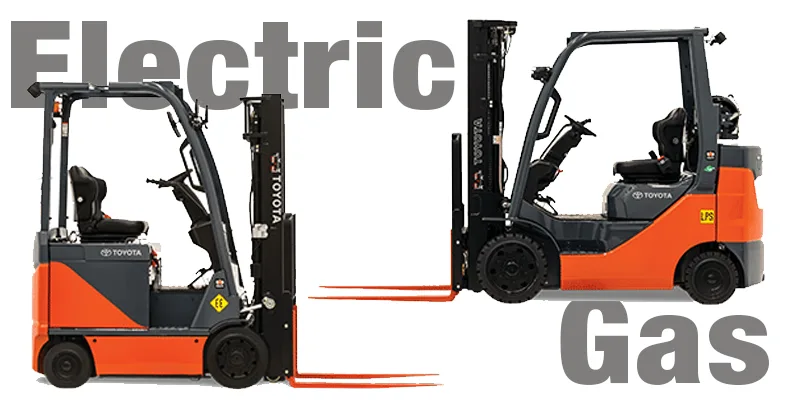
Deciding whether an internal combustion forklift or an electric forklift is appropriate for your application can seem like a daunting task. Here are some high-level considerations that you might take into account when choosing between a gas-powered and electric-powered forklift.
ELECTRIC FORKLIFT BENEFITS
- Typically less maintenance than I/C forklifts
- Quieter with little emission sounds
- No fuel-storage requirements
- Requires a charging station
- No tailpipe emissions
- Lifespan depends on the application, use, and maintenance
- A better option for smaller, confined areas
INTERNAL COMBUSTION FORKLIFT BENEFITS
- Operate on gasoline, diesel, compressed natural gas, or liquid propane gas
- Primarily used outdoors, but can be used in moderation in some indoor applications
- Can operate in various conditions
- No batteries to recharge
- Toyota’s IC Forklift line can lift over 51,000 lbs
- Lifespan depends on the application, use, and maintenance
- Noise emissions meet or exceed ANSI B56.1 standards
Forklifts can be fitted with pneumatic tires, made of durable rubber that can go outdoors. These tires can be similar to the tires on your car, or solid tires, called cushion tires in the industry, which are made of solid rubber, typically used on forklifts that will be used indoors on hard and flat surfaces.
Forklifts can be outfitted with different attachments, such as carrying barrels or rolls of paper instead of lifting pallets. Each type of forklift class is designed for certain types of loads and specific working conditions.
Don’t know which forklift fuel type is best for your business? Contact us and we can help!